Article
Why Liquidation Businesses Must Pivot, Diversify, and Get Out of Their Own Way
Mike Lavigne of Med City Auctions on Target manifesting, MSRP myths, live selling, and why overhead kills good businesses.
 Zac Montgomery

Why Liquidation Businesses Must Pivot, Diversify, and Get Out of Their Own Way
Mike Lavigne of Med City Auctions on Target manifesting, MSRP myths, live selling, and why overhead kills good businesses.
If you work in liquidation, resale, or pallet flipping, you already know the game changes fast. What worked last year can become unprofitable almost overnight, and the people who survive are the ones who adapt before they get forced to.
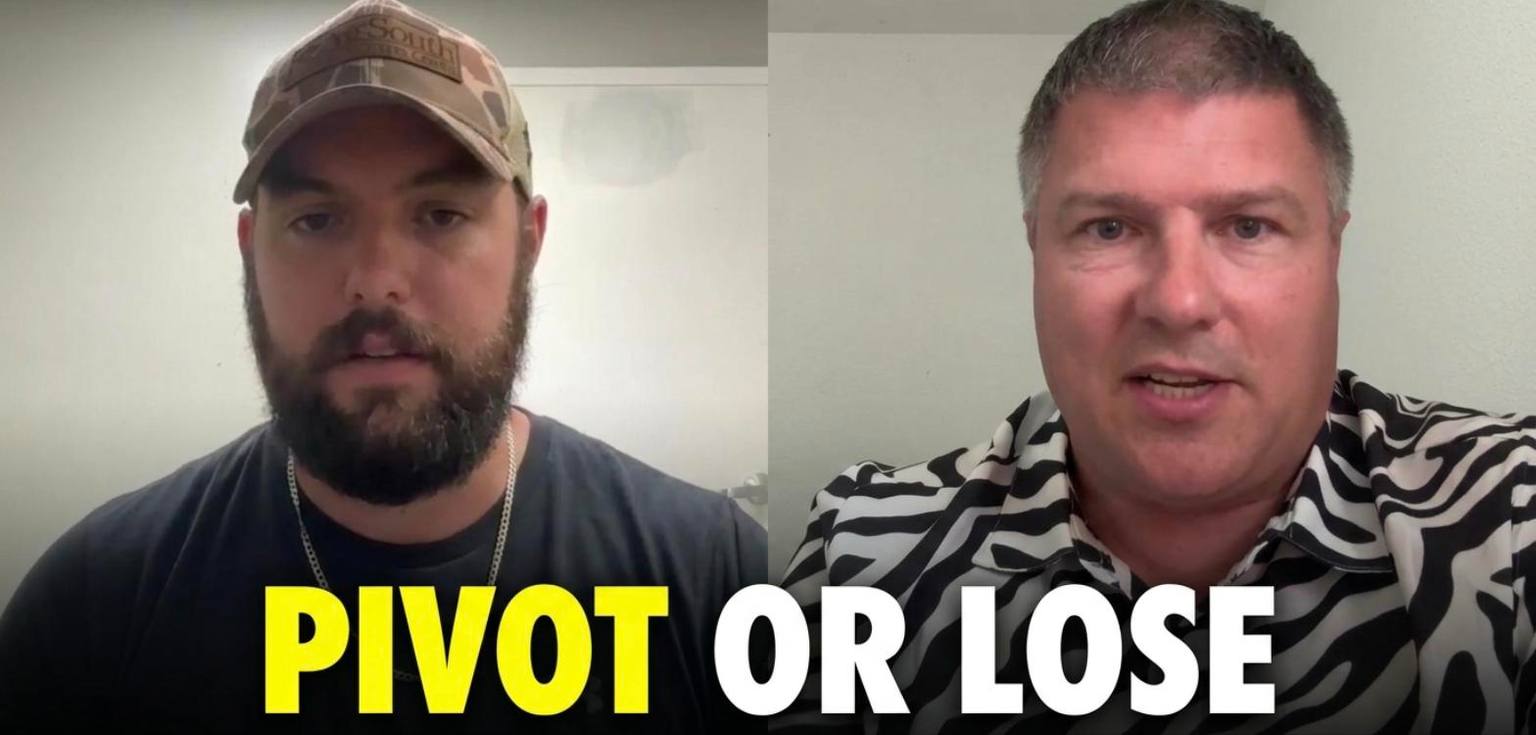
In this conversation with Mike Lavigne of Med City Auctions, we dug into what's really happening in liquidation right now, from Target manifesting and Sam's Club pricing to live selling, overhead, and why the smartest operators are using liquidation as a cash engine, not a forever plan.
The Liquidation Market Has Changed, and It's Not Going Back
The biggest theme in this conversation was simple: the old liquidation model is not the same business anymore.
For years, experienced buyers treated unmanifested loads like gold. If a load wasn't manifested, it often meant there was hidden value inside. But Mike pointed out that the dynamic has flipped. Now, unmanifested can be risky because the better merchandise may already have been pulled out before the load reaches you.
That shift matters because a lot of buyers still make decisions based on old assumptions. They look at a category like Target and think in terms of what it used to be, not what it is now. But liquidation is not about what a retailer used to give away. It's about what they're giving up today.
Why Target pricing is such a hot topic
Target came up repeatedly because it's a perfect example of how the industry evolves. Mike explained that many Target contracts moved from a traditional pallet model to a manifested model. On paper, the retail values can still look strong. In practice, the quality mix changed dramatically.
A load that once included higher-value items like KitchenAid mixers, vacuums, and boxed appliances may now be filled with lower-value Bullseye-style items, clothing, and low-dollar goods. The retail number can still look impressive, but the actual resale potential is different.
That's where a lot of newer buyers get burned. They see MSRP and assume it equals resale value. It doesn't.
MSRP is not the same as real market value
One of the best takeaways from the discussion was the reminder that MSRP can be misleading.
If a private-label tumbler has an MSRP of $49.99, that does not mean you can sell it for anywhere near that amount. The brand matters. The channel matters. The demand matters. A Yeti tumbler, for example, may actually support a strong resale price because buyers recognize the brand and trust its value.
Target private-label clothing is a different story. Even if the tag says $30, the actual resale market may only support $5, especially if it's a lower-demand house brand. That gap between MSRP and reality is where bad purchases happen.
If you're buying liquidation, you need to stop asking, "What does the manifest say it's worth?" and start asking, "What will this actually sell for in my market?"
The New Winner in Liquidation Is the Operator Who Can Adapt
The second major takeaway is that the market rewards flexibility now more than ever.
Both Zac and Mike made the same point in different ways. If you build your entire business around one retail source, one contract type, or one sales channel, you're vulnerable. Retailers change programs, they change fulfillment methods, and they change what gets pulled before liquidation.
That means the businesses that survive are not the ones with the fanciest warehouse or the biggest truckload volume. They're the ones that can pivot quickly.
Mike described how his own business shifted over time. He moved from a more general liquidation model into closeouts and more direct-to-consumer inventory. He also leaned harder into Whatnot, local selling, and individual-item sales. That diversification wasn't accidental. It was a response to the market.
Why live selling is growing
Platforms like Whatnot, TikTok, Poshmark, and other live commerce channels are changing how liquidation gets sold. People don't just want pallets anymore. They want accessibility, convenience, and entertainment. They want to feel like they're getting a deal without having to buy 26 pallets at a time.
But the important point is this: live selling only works if you buy correctly.
Mike explained that many sellers overpay for liquidation inventory because they assume live selling automatically fixes the margin problem. It doesn't. If you pay too much for the product, the platform fees, shipping, labor, and time will eat your profit fast.
Know your buyer before you choose your model
One of the most useful distinctions in the conversation was between wholesale buyers and resale buyers.
If you're selling to a consumer, you might get a much better per-unit price than you'd get selling in bulk. But that doesn't mean it's the right business model for you. Zac shared that his own live-selling operation became a headache because his best margins came from bulk wholesale, not from shipping individual units one by one.
That's a lesson a lot of operators need to hear. A higher sale price doesn't automatically mean a better business.
Ask yourself:
- How much labor does this channel require?
- What are the real fees?
- How many units do you need to move to make it worth it?
- Does this fit how your business already operates?
If the answer is no, don't force it just because everyone else is talking about it.
Diversification Is No Longer Optional
If there was one point both guests kept coming back to, it was this: you cannot rely on one stream forever. That applies to product categories, customer types, and income sources.
Mike talked about how he diversified from pallet sales into local retail, Whatnot, truckloads, and other channels. Zac shared that every good dollar he made from liquidation was pushed into real estate. That didn't happen because they were trying to look smart. It happened because they understood the risk of depending on liquidation alone.
This is especially important in a market where pricing tends to move up faster than it moves down. Once the new baseline is established, it usually sticks. If Target clothing moves from $1.00 a unit to $2.00 a unit delivered, you should not assume it's coming back down just because buyers are uncomfortable.
What diversification actually looks like
Diversification in liquidation doesn't just mean "sell a little bit of everything." It can mean:
- Selling different product categories
- Using different platforms
- Serving different customer types
- Adding a complementary service like freight brokerage
- Moving money into assets outside the business
Mike mentioned freight brokerage and trucking as natural extensions of the business. Zac talked about real estate as the place where liquidation profits should ultimately go. Those aren't random side hustles. They're ways to reduce dependence on a single fragile supply chain.
And that matters because liquidation is cyclical. Some months are hot. Some months are slow. Some contracts dry up. Some programs get restructured. If your entire business model only works in one perfect version of the market, it's not really a stable business.
The Hidden Cost That Kills Good Businesses: Overhead
The most sobering part of the conversation was the discussion of overhead.
A lot of people in liquidation focus on gross revenue, but gross revenue doesn't pay the bills. Buildings, staff, freight, processing, and dead inventory do.
Zac and Mike both told stories about how easy it is to fill whatever space you have. You move into a small building, it gets full. You move into a bigger one, it gets full too. That's the trap. Growth feels like progress, but if overhead expands faster than margin, you can get crushed.
Mike shared a great example from his early days, running out of a 40 by 80 pole shed and making it work. Zac described the stress of handling huge load volumes, where the business looked amazing on the outside but cash was constantly tied up on the floor.
Why the big warehouse mindset can backfire
There's a tendency in this industry to think bigger is always better. Bigger warehouse, bigger volume, bigger contracts, bigger team.
But bigger also means:
- More fixed cost
- More labor dependency
- More pressure to keep volume flowing
- More risk when pricing shifts
The more you rely on scale, the more fragile you can become if the market turns.
That's why both guests stressed trimming the fat. If you don't need a massive facility, don't keep one just to look important. If a staff role isn't essential, rethink it. If a process isn't producing value, cut it.
Sometimes the smartest move is not to grow. It's to become more efficient.
The Real Goal: Use Liquidation to Build Something Bigger
The strongest thread running through the whole conversation was philosophical but practical: liquidation should fund your next move.
That doesn't mean liquidation is bad. Far from it. Both Zac and Mike were clear that liquidation has been life-changing for them. It funded businesses, assets, real estate, and freedom. But neither of them believes it should be the final destination if you have the option to do more.
Liquidation can create cash. It can create opportunity. It can even create wealth. But if you keep reinvesting every dollar back into the same fragile loop, you can lose it just as fast as you made it.
What smart money looks like in this business
Smart money in liquidation often looks boring:
- Paying down debt
- Buying real estate
- Building passive income
- Keeping reserves
- Avoiding overleveraging during hot cycles
That might not sound exciting, but it's what gives you staying power.
Zac made the point that he's seen too many people make a lot of money in a strong cycle, then lose it because they assumed the good times would last. Mike said something similar. Enough is enough, and contentment matters.
That's a hard lesson for ambitious people, but it's a valuable one. There's a difference between being driven and being trapped by growth for growth's sake.
Final Takeaway: Don't Just Survive the Market, Position Yourself for the Next One
The liquidation industry is still full of opportunity, but the easy money is not automatic anymore. Retailers are better at recovery, manifesting has changed the game, and buyers are more informed, or more skeptical, than they used to be.
The operators who will win are the ones who keep learning, keep pivoting, and keep their eyes on the bigger picture. That means buying smarter, diversifying your channels, managing overhead, and treating liquidation like a tool instead of a life sentence.
If you're still betting your business on the way things used to work, now is the time to adjust. And if you're already adapting, keep going. The people who last in this business are rarely the loudest. They're the ones who stay flexible, honest, and financially disciplined.
No comments yet. Be the first to share your thoughts!