Article
# Navigating Taxes for Resellers: Insights from a CPA
Mark Two from Reseller Academy shares essential tax strategies for resellers, covering business structures, common mistakes, and deduction tactics to maximize profits while minimizing tax liability.
 Zac Montgomery

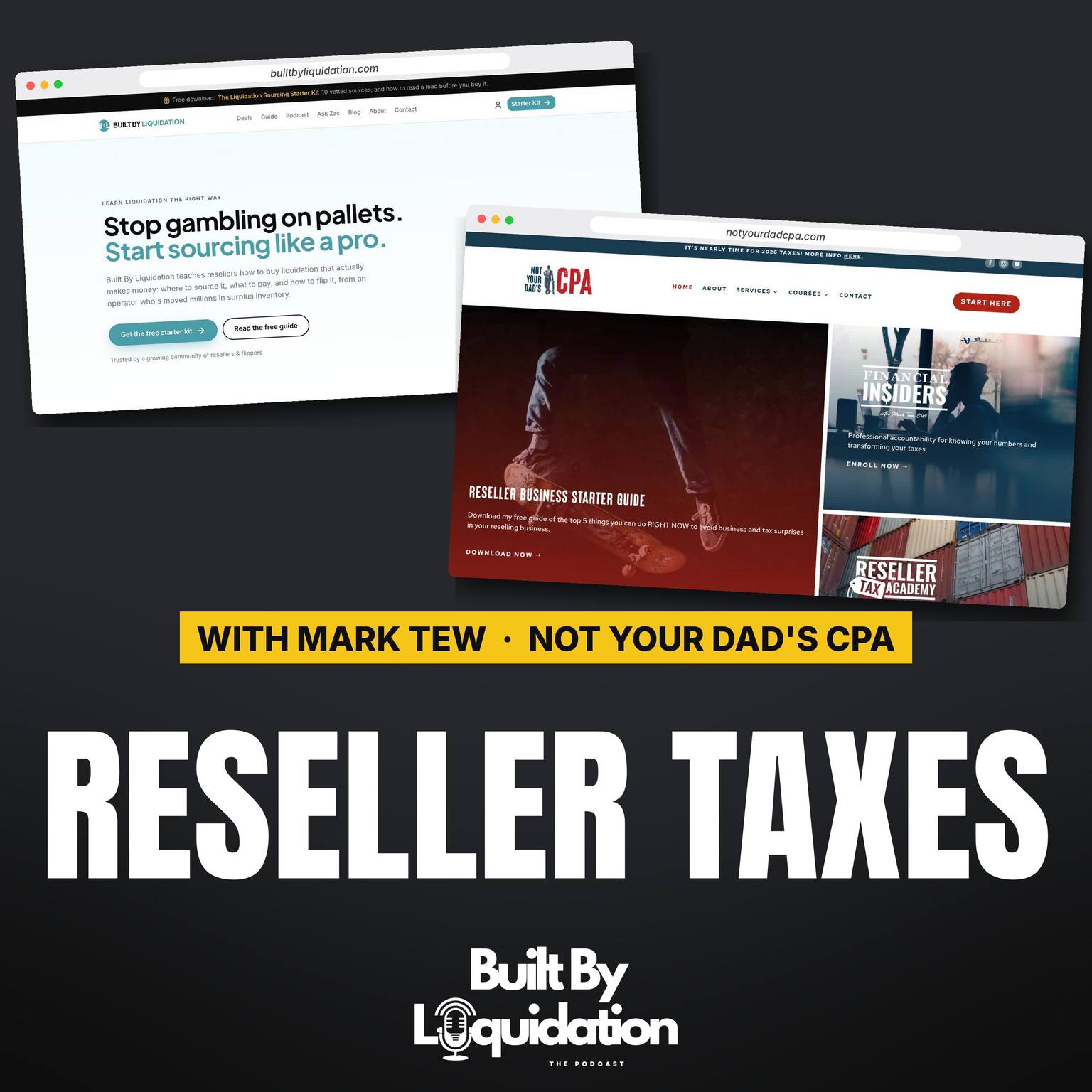
Mark Two shares valuable tax tips for resellers and business owners.
In this episode of the Built by Liquidation and Resellers Podcast, Zac sits down with Mark Two of Reseller Academy. Together, they dive into the intricacies of taxes for resellers, offering crucial insights that can help you navigate the financial side of your business with confidence.
From Accountant to Reseller Specialist
Mark’s journey into accounting began during his college years. After working at both large and small accounting firms, he transitioned into corporate finance. However, his passion for taxes led him to start his own practice, focusing specifically on resellers. He discovered a vibrant community of eBay sellers and recognized the growing need for specialized tax guidance in this niche.
"I realized there was something big there. So I just decided to start specializing in taxes for resellers." — Mark Two
Common Mistakes Resellers Make
Mark highlighted several misconceptions that can hinder new resellers:
- Overthinking Business Structure: Many aspiring resellers delay starting their business because they feel they need a formal structure like an LLC or S-Corp. Mark emphasizes that you can start as a sole proprietor simply by selling your items online.
- Neglecting Record Keeping: Proper bookkeeping is crucial. At a minimum, have a separate bank account for your business transactions to simplify tax reporting.
"A lot of people worry about not having the correct type of business, which delays them from starting. Just jump in!" — Mark Two
Understanding LLCs and S-Corps
As the conversation progressed, Zac and Mark discussed the differences between LLCs and S-Corps:
- LLC: Provides limited liability protection but doesn’t offer tax savings. Many resellers may not need one immediately, depending on their risk level.
- S-Corp: Allows for potential tax savings on self-employment taxes, especially beneficial as profits grow. Mark explains that with an S-Corp, you pay yourself a reasonable salary, while the leftover profits are treated differently for tax purposes.
"With an S-Corp, the self-employment tax portion on your profits disappears. So if you're making a hundred thousand dollars profit as an S-Corp, you're basically saving fifteen thousand dollars." — Mark Two
The Balance Between Profit and Taxation
A key takeaway for resellers is finding the balance between showing enough profit for loan approvals while minimizing tax liabilities. Mark advises resellers to be mindful of deductions, like the home office deduction, which can increase reported income but also raise tax bills.
"There are deductions that you don’t necessarily have to show. For example, you don't have to claim the home office deduction." — Mark Two
Keeping Records and Claiming Deductions
When it comes to maintaining records for tax deductions, particularly for a home office, Mark suggests:
- Clearly define the space used for business.
- Keep track of square footage and bills related to that space.
"You just have to have a space in your home that you use regularly and exclusively for the business." — Mark Two
This episode is packed with insights that can help resellers and small business owners make informed decisions about their taxes and business structures. For more detailed advice and personal stories from Mark, tune in to the full episode of Built by Liquidation and Resellers Podcast.
No comments yet. Be the first to share your thoughts!