Article
Unclaimed Mail vs. Returned Mail: What Resellers Are Actually Buying
Not every pallet advertised as unclaimed mail is actually undelivered mail. Zac Montgomery talks with Mike Flores of Wireless Bros about the difference, what shipping labels can reveal, and how to evaluate mystery-mail pallets before putting serious money on the line.
 Zac Montgomery

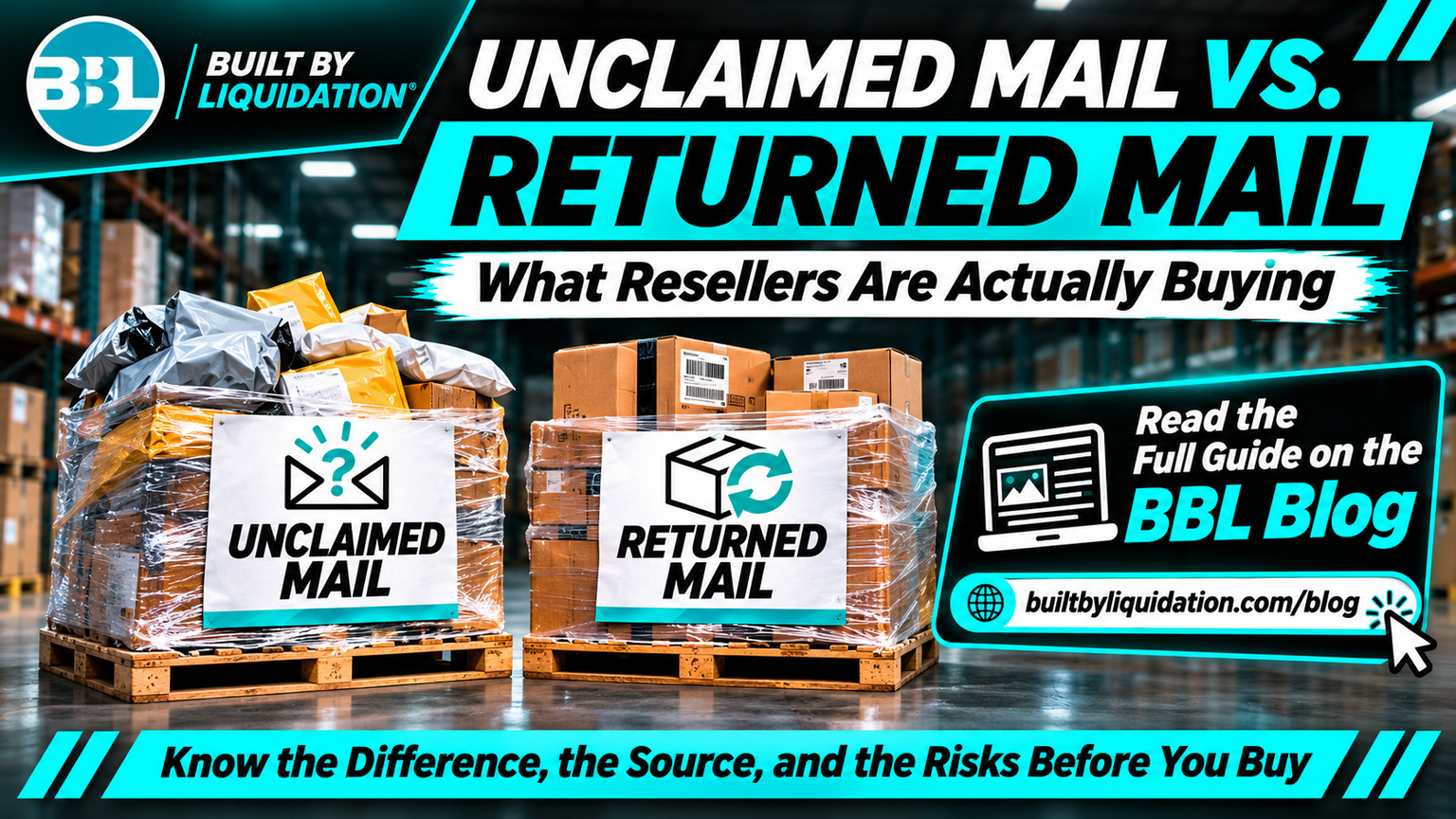
🎥 What Resellers Are Actually Buying
Everybody wants the mystery package with an expensive watch inside. Nobody gets excited about generic clothing. But if you're buying pallets to make money, those possibilities shouldn't carry equal weight.
I recently sat down with Mike Flores from Wireless Bros to talk about unclaimed mail, returned mail, and why those terms get thrown around like they all mean the same thing. Mike works with 3PL return programs, so he's seen how that inventory enters liquidation.
I've bought and sold some mystery mail, but I don't claim to be the expert. That's why I asked Mike.
Unclaimed Mail and Returned Mail Aren't the Same Product
Returned mail is merchandise a customer shipped back, generally to a seller's or fulfillment company's return center. Mike explained that his programs receive packages addressed to specific return facilities. Some items have been opened; some may still be new. Either way, they're returns.
Undelivered mail is different. A carrier attempted delivery, but the package couldn't reach its recipient or wasn't collected. In the conversation, Mike described unclaimed mail as a related category, including parcels that sat waiting for pickup and were never claimed.
A pallet of consumer returns doesn't become undelivered mail because somebody leaves the shipping bags on it.
And the word “mystery” only describes what you know about the contents. It doesn't establish where that inventory came from.
The Shipping Labels Tell You Something—Not Everything
Mike offered one practical clue: look at where the packages were headed. If a batch is addressed to the same return center, there's a good chance you're looking at returned mail. Genuine undelivered parcels may show different intended recipients.
Don't turn that into a foolproof authentication method. Mike said he's seen people create labels, too. Pictures help, but labels aren't proof of a carrier contract.
There's another issue people overlook: customer privacy. Mike described carrier programs where processors had to black out personal information, remove labels, or open boxes and separate the merchandise. That means a legitimate load may arrive without the untouched, individually addressed packages buyers imagine.
If you're paying extra because every package supposedly came straight off a carrier truck untouched, you should know exactly how it was handled before the supplier received it.
A Sealed Package Doesn't Guarantee a Valuable Item
Here's where the mystery-mail conversation gets a little ridiculous. People hear “unclaimed mail” and picture watches, electronics, or something collectible. The reality depends on who's generating the inventory.
Mike said his return-center programs contain a lot of general merchandise and clothing, including unbranded products. He was clear that buyers shouldn't expect premium branded items simply because the inventory is still packaged.
A carrier handling returns across sellers could produce a broader mix. That's still not a promise of value.
Part of the attraction is the hunt. I understand that. But if your goal is resale income, a treasure hunt is not a buying strategy. You have to make the numbers work on the ordinary items, not the hypothetical jackpot.
The Source Matters More Than the Marketing Name
A 3PL might process returns for a limited group of brands. That means the same SKUs can show up repeatedly from one load to the next. Mike acknowledged that predictability can be challenging if you're selling to auction buyers who want variety.
It can also be useful. If a product actually sells in your store, being able to source a similar mix again is an advantage. With traditional liquidation, the thing you sold out of last week may never show up again.
Ask your supplier who handles the returns, what categories dominate, whether overstock is mixed in, and how much of the assortment repeats. Those details tell you far more than “premium mystery pallet.”
When you're considering a full truck, our guide to buying liquidation truckloads covers the additional risks of unmanifested inventory, freight, and storage.
Don't Spend Truckload Money to Avoid Asking Questions
Mike told me he'll sometimes send a prospective buyer two pallets as a test rather than push them straight into a full truckload. We discussed a buyer paying around $800 to ship two pallets rather than risking a $50,000 or $60,000 mistake. That's his example, not a standard freight quote.
My preference is to visit the warehouse when you're about to spend serious money. Take the drive or the flight. Look at the inventory. Ask to open samples if the supplier allows it. If a visit isn't practical, ask whether you can test a smaller lot.
And don't forget your real costs: inventory price, freight, sorting, disposal, selling fees, and labor. A low purchase price can become expensive when half your time goes into merchandise you can't move.
The same thinking comes up in my conversation with Brent Yager about sourcing and margins: the deal has to work for your business, not just look attractive on paper.
Set Expectations Before You Open the First Box
I also asked Mike about buyers calling every disappointing load a scam. There's a real difference between a seller misrepresenting the source, failing to ship what was purchased, and a legitimate unmanifested load simply having poor resale value.
That doesn't excuse bad suppliers. Both sides need clear terms. A supplier should explain what they know, what they don't know, and what the buyer is actually paying for.
My takeaway is pretty simple: returned mail can be a workable inventory program. So can legitimately sourced undelivered mail. But buy the source, the condition, and the expected resale mix—not the excitement of a sealed package. If you need a guaranteed winner in every box, this is probably the wrong product for you.
Frequently Asked Questions
1. What is the difference between unclaimed mail and returned mail?
Returned mail was sent back by a customer or sender, often to a return center. Unclaimed or undelivered mail generally refers to packages that couldn't be delivered or collected. Ask the supplier which one they're actually selling.
2. Are returned-mail packages always used?
Mike explained that returned packages may have been opened, but some merchandise can still be new. Packaging alone won't tell you its condition.
3. Can an unclaimed mail pallet contain expensive electronics?
It can, depending on the source, but you shouldn't price the pallet as though it will. A possible high-value find is not dependable inventory value.
4. Why are addresses or shipping labels removed from mystery mail?
Some programs remove or obscure personal information before resale. Mike described blacking out labels, cutting them off, or opening parcels as part of processing.
5. How do I verify the source of a mystery mail supplier?
Ask where the inventory originated, who processed it, and whether you can inspect a sample. Photos of package labels are a starting point, not proof by themselves.
6. Will every returned-mail pallet have a different product mix?
Not necessarily. A 3PL serving a limited group of sellers may receive the same SKUs repeatedly, which can be good or bad depending on your customers.
7. Do unclaimed mail pallets come with manifests?
Some lots may have limited descriptions or counts; others are sold unmanifested. Get the exact documentation and any condition limitations in writing before paying.
8. What costs should I calculate before buying mystery mail pallets?
Include the purchase price, freight, sorting time, disposal, selling fees, and packaging. Cheap inventory isn't cheap if it takes too much work to sell.
9. Should a beginner buy an entire truckload of mystery mail?
I'd test a smaller lot first. If the supplier allows visits, inspect the inventory in person before committing money your business can't afford to lose.
10. Is a disappointing mystery mail pallet automatically a scam?
A poor outcome from a correctly described unmanifested lot isn't the same as a seller shipping the wrong product or not delivering it. Compare what arrived with what was promised.
Before your first mystery-mail purchase, get the free Liquidation Sourcing Starter Kit. It will help you think through suppliers, costs, and the risks before you buy.
No comments yet. Be the first to share your thoughts!